Justification is an act of God’s free grace, wherein he pardoneth all our sinsa and accepteth us as righteous in his sightb only for the righteousness of Christ imputed to usc and received by faith alone.d
What is justification?
Justification is an act of God’s free grace, wherein he pardons all our sinsa and accepts us as righteous in his sightb only for the righteousness of Christ imputed to usc and received by faith alone.d
a. Romans 3:24–25; Romans 4:6–8
Romans 3:24–25
3:24 Being justified freely by his grace through the redemption that is in Christ Jesus: 3:25 Whom God hath set forth to be a propitiation through faith in his blood, to declare his righteousness for the remission of sins that are past, through the forbearance of God;
3:24 and are justified freely by His grace through the redemption that is in Christ Jesus. 3:25 God presented Him as the atoning sacrifice through faith in His blood, in order to demonstrate His righteousness, because in His forbearance He had passed over the sins committed beforehand.
Romans 4:6–8
4:6 Even as David also describeth the blessedness of the man, unto whom God imputeth righteousness without works, 4:7 Saying, Blessed are they whose iniquities are forgiven, and whose sins are covered. 4:8 Blessed is the man to whom the Lord will not impute sin.
4:6 And David speaks likewise of the blessedness of the man to whom God credits righteousness apart from works: 4:7 "Blessed are they whose lawless acts are forgiven, whose sins are covered. 4:8 Blessed is the man whose sin the Lord will never count against him."
King James VersionBerean Standard Bible
b. 2 Corinthians 5:19; 2 Corinthians 5:21
2 Corinthians 5:19
5:19 To wit, that God was in Christ, reconciling the world unto himself, not imputing their trespasses unto them; and hath committed unto us the word of reconciliation.
5:19 that God was reconciling the world to Himself in Christ, not counting men's trespasses against them. And He has committed to us the message of reconciliation.
2 Corinthians 5:21
5:21 For he hath made him to be sin for us, who knew no sin; that we might be made the righteousness of God in him.
5:21 God made Him who knew no sin to be sin on our behalf, so that in Him we might become the righteousness of God.
King James VersionBerean Standard Bible
c. Romans 5:17–19
Romans 5:17–19
5:17 For if by one man’s offence death reigned by one; much more they which receive abundance of grace and of the gift of righteousness shall reign in life by one, Jesus Christ.) 5:18 Therefore as by the offence of one judgment came upon all men to condemnation; even so by the righteousness of one the free gift came upon all men unto justification of life. 5:19 For as by one man’s disobedience many were made sinners, so by the obedience of one shall many be made righteous.
5:17 For if, by the trespass of the one man, death reigned through that one man, how much more will those who receive an abundance of grace and of the gift of righteousness reign in life through the one man, Jesus Christ! 5:18 So then, just as one trespass brought condemnation for all men, so also one act of righteousness brought justification and life for all men. 5:19 For just as through the disobedience of the one man the many were made sinners, so also through the obedience of the one man the many will be made righteous.
King James VersionBerean Standard Bible
d. Galatians 2:16; Philippians 3:9
Galatians 2:16
2:16 Knowing that a man is not justified by the works of the law, but by the faith of Jesus Christ, even we have believed in Jesus Christ, that we might be justified by the faith of Christ, and not by the works of the law: for by the works of the law shall no flesh be justified.
2:16 know that a man is not justified by works of the law, but by faith in Jesus Christ. So we, too, have believed in Christ Jesus, that we may be justified by faith in Christ and not by works of the law, because by works of the law no one will be justified.
Philippians 3:9
3:9 And be found in him, not having mine own righteousness, which is of the law, but that which is through the faith of Christ, the righteousness which is of God by faith:
3:9 and be found in Him, not having my own righteousness from the law, but that which is through faith in Christ, the righteousness from God on the basis of faith.
Justification is an act of God’s free grace, wherein he pardoneth all our sins, and accepteth us as righteous in his sight, only for the righteousness of Christ imputed to us, and received by faith alone.
Westminster Shorter Catechism (1647), Question 33
What is justification?
Justification is an act of God’s free grace, wherein he pardoneth all our sins and accepteth us as righteous in his sight only for the righteousness of Christ imputed to us and received by faith alone.
Justification is an act of God’s free grace, wherein he pardoneth all our sins, and accepteth us as righteous in his sight, only for the righteousness of Christ imputed to us, and received by faith alone.
Justification is an act of God’s free grace, wherein he pardons all our sins, and accepts us as righteous in his sight, only for the righteousness of Christ imputed to us, and received by faith alone.
Justification is an act of God’s free grace, wherein he pardons all our sins and accepts us as righteous in his sight only for the righteousness of Christ imputed to us and received by faith alone.
Justification is an act of God’s free grace, wherein he pardons all our sins, and accepts us as righteous in his sight, only for the righteousness of Christ imputed to us, and received by faith alone.
Justification is an act of God’s free grace unto sinners, in which he pardoneth all their sins, accepteth and accounteth their persons righteous in his sight; not for any thing wrought in them, or done by them, but only for the perfect obedience and full satisfaction of Christ, by God imputed to them, and received by faith alone.
Although Christ, by his obedience and death, did make a proper, real, and full satisfaction to God’s justice in the behalf of them that are justified; yet inasmuch as God accepteth the satisfaction from a surety, which he might have demanded of them, and did provide this surety, his own only Son, imputing his righteousness to them, and requiring nothing of them for their justification but faith, which also is his gift, their justification is to them of free grace.
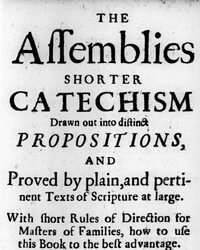
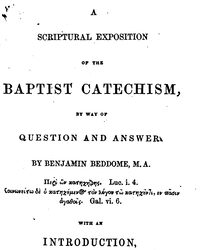
What is Justification? Justification is an act of Gods free grace, wherein he pardoneth all our sins, and accepteth us as righteous in his sight, only for the righteousness of…
What is justification? Iustification is an Act of Gods free-grace, wherein he pardoneth all our sins, and accepteth us, as righteous in his sight, only for the righteousness of…
What is Justification? Justification is an act of Gods free Grace, wherein he pardoneth all our sins, and accepteth us as righteous in his sight, only for the Righteousness of…
What is Iustification? Justification is an act of Gods free grace, wherein he pardoneth all our sins, and accepteth us as righteous in his sight, only for the righteousness of…
What is Iustification? Iustification is an Act of God’s Free-grace, wherein he pardoneth all our Sins, and accepteth us as righteous in his sight, only for the righteousness of…
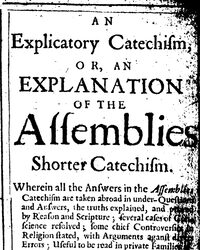
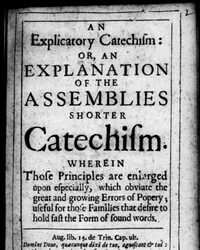
Rom. 3.24. Being justified freely by his grace. Quest. XXI. What is Justification? Resp. It is an Act of God’s Free-grace, whereby he pardoneth all our sins, and accepts us as…
What is Justification? Justification is an Act of God’s Free Grace, wherein he pardoneth all our Sins, and accepteth us as Righteous in his Sight, only for the Righteousness of…
We owe the full and clear exhibition of the great Christian doctrine of justification, as we here possess it, to the labours of the Reformation divines. The Greek Fathers, after…
Is justification an act of God? Yes. It is God that justifieth, Does justification include in it the forgiveness of sins? Yes. We have redemption through his blood, the…