Westminster Shorter Catechism (1647), Westminster Assembly · PDF

Question 53

Text

Which is the third commandment?

The third commandment is, Thou shalt not take the name of the Lord thy God in vain: for the Lord will not hold him guiltless that taketh his name in vain.a

Which is the third commandment?

The third commandment is, You shall not take the name of the Lord your God in vain: for the Lord will not hold him guiltless that takes his name in vain.a

  1. a. Exodus 20:7

    Exodus 20:7

    20:7 Thou shalt not take the name of the Lord thy God in vain; for the Lord will not hold him guiltless that taketh his name in vain.

    20:7 You shall not take the name of the LORD your God in vain, for the LORD will not leave anyone unpunished who takes His name in vain.

    King James VersionBerean Standard Bible
Diff style

Changes in The Baptist Catechism (1695), Question 58

No change, but in spelling and punctuation.

No change, but in spelling and punctuation.

The Baptist Catechism (1695), Question 58

Which is the third commandment?

The third commandment is, Thou shalt not take the name of the Lord thy God in vain; for the Lord will not hold him guiltless that taketh his name in vain.

Westminster Shorter Catechism (1647), Question 53

Which is the third commandment?

The third commandment is, Thou shalt not take the name of the Lord thy God in vain: for the Lord will not hold him guiltless that taketh his name in vain.

The Baptist Catechism (1695), Question 58

Which is the third commandment?

The third commandment is, Thou shalt not take the name of the Lord thy God in vain; for the Lord will not hold him guiltless that taketh his name in vain.

The Baptist Catechism (1695), Question 58

Which is the third commandment?

The third commandment is, You shall not take the name of the Lord your God in vain; for the Lord will not hold him guiltless that takes his name in vain.

Westminster Shorter Catechism (modernized) (1647), Question 53

Which is the third commandment?

The third commandment is, You shall not take the name of the Lord your God in vain: for the Lord will not hold him guiltless that takes his name in vain.

The Baptist Catechism (1695), Question 58

Which is the third commandment?

The third commandment is, You shall not take the name of the Lord your God in vain; for the Lord will not hold him guiltless that takes his name in vain.

Related (1)

Westminster Larger Catechism (1647), parallel to this question

Question 111

Which is the third commandment?

The third commandment is, Thou shalt not take the name of the Lord thy God in vain: for the Lord will not hold him guiltless that taketh his name in vain.

Commentaries (12)

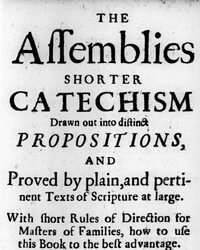
  • Joseph Alleine, 1672, A Most Familiar Explanation of the Assemblies Shorter Catechism

    Which is the third Commandment? The third Commandment is, Thou shalt not take the name of the Lord thy God in vain; for the Lord will not hold him guiltless that taketh his name…

    Joseph Alleine’s text
  • Thomas Lye, 1672, The Assemblies Shorter Catechism Drawn out into Distinct Propositions

    Which is the third Commandment? The third Commandment is, Thou shalt not take the name of the Lord thy God in vain; for the Lord will not hold him guiltless, that taketh his name…

    Thomas Lye’s text
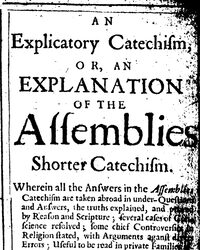
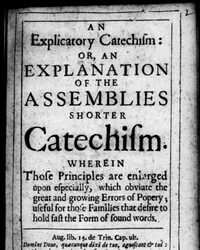
  • Thomas Vincent, 1673, An Explicatory Catechism

    Which is the third Commandement? The third Commandement is, Thou shalt not take the Name of the Lord thy God in vain, for the Lord will not hold him guiltless that taketh his Name…

    Thomas Vincent’s text
  • 1675, An Explicatory Catechism

    What is the third Commandment? The third Commandment, is, Thou shalt not take the Name of the Lord thy God in vain, for the Lord will not hold him guiltless, that taketh his Name…

    Its text
  • John Flavel, 1692, An Exposition of the Assembly’s Catechism

    Which is the third Commandment? The third Commandment is, Thou shalt not take the Name of the Lord thy God in vain; for the Lord will not hold him guiltless, that taketh his Name…

    John Flavel’s text
  • Thomas Watson, 1692, A Body of Practical Divinity

    Exod. 20.7. Thou shalt not take the Name of the Lord thy God in vain, for the Lord will not hold him guiltless, &c. This Commandment has Two Parts; First, A Negative expressed,…

    Thomas Watson’s text
  • Matthew Henry, 1703, A Scripture Catechism

    What is the Third Commandment? The Third Commandment is, Thou shalt not take the Name of the Lord thy God in vain; for the Lord will not hold him guiltless that taketh his Name in…

    Matthew Henry’s text
  • Ebenezer Erskine and James Fisher, 1753, The Assembly’s Shorter Catechism Explained, by Way of Question and Answer

    Which is the third commandment? The third commandment is, Thou shalt not take the name of the Lord thy God in vain: for the Lord will not hold him guiltless that taketh his name…

    Ebenezer Erskine and James Fisher’s text
  • Alexander Whyte, 1883, A Commentary on the Shorter Catechism

    Thou shalt not take the name of the Lord thy God in vain—The first commandment teaches us that Jehovah is God alone: He has no equal and no rival. The second commandment goes on…

    Alexander Whyte’s text
  • Francis R. Beattie, 1896, The Presbyterian Standards

    Shorter Catechism, 43–62; Larger Catechism, 101–121; Confession of Faith, —. The exposition of the commandments in order is now to be proceeded with, and in this chapter a brief…

    Francis R. Beattie’s text
  • Benjamin Beddome, 1752, A Scriptural Exposition of the Baptist Catechism

    On The Baptist Catechism (1695), Question 58, which adapts this question

    By God’s name are we to understand his nature? Yes. My name is in him, (speaking of Christ) Should we reverence the name of God? Yes. That thou mayest fear this glorious and…

    Benjamin Beddome’s text
  • Francis R. Beattie, 1896, The Presbyterian Standards

    On Westminster Larger Catechism (1647), Question 111, parallel to this question

    Shorter Catechism, 43–62; Larger Catechism, 101–121; Confession of Faith, —. The exposition of the commandments in order is now to be proceeded with, and in this chapter a brief…

    Francis R. Beattie’s text