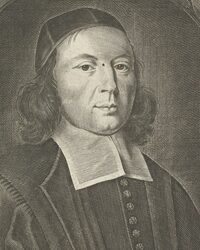
Westminster Shorter Catechism (1647), Westminster Assembly · PDF

Question 40

Text

What did God at first reveal to man for the rule of his obedience?

The rule which God at first revealed to man for his obedience, was the moral law.a

What did God at first reveal to man for the rule of his obedience?

The rule which God at first revealed to man for his obedience, was the moral law.a

  1. a. Romans 2:14–15; Romans 10:5

    Romans 2:14–15

    2:14 For when the Gentiles, which have not the law, do by nature the things contained in the law, these, having not the law, are a law unto themselves: 2:15 Which shew the work of the law written in their hearts, their conscience also bearing witness, and their thoughts the mean while accusing or else excusing one another;)

    2:14 Indeed, when Gentiles, who do not have the law, do by nature what the law requires, they are a law to themselves, even though they do not have the law. 2:15 So they show that the work of the law is written on their hearts, their consciences also bearing witness, and their thoughts either accusing or defending them

    Romans 10:5

    10:5 For Moses describeth the righteousness which is of the law, That the man which doeth those things shall live by them.

    10:5 For concerning the righteousness that is by the law, Moses writes: "The man who does these things will live by them."

    King James VersionBerean Standard Bible
Diff style

Changes in The Baptist Catechism (1695), Question 45

No change.

No change.

The Baptist Catechism (1695), Question 45

What did God at first reveal to man for the rule of his obedience?

The rule which God at first revealed to man for his obedience, was the moral law.

Westminster Shorter Catechism (1647), Question 40

What did God at first reveal to man for the rule of his obedience?

The rule which God at first revealed to man for his obedience, was the moral law.

The Baptist Catechism (1695), Question 45

What did God at first reveal to man for the rule of his obedience?

The rule which God at first revealed to man for his obedience, was the moral law.

The Baptist Catechism (1695), Question 45

What did God at first reveal to man for the rule of his obedience?

The rule which God at first revealed to man for his obedience, was the moral law.

Westminster Shorter Catechism (modernized) (1647), Question 40

What did God at first reveal to man for the rule of his obedience?

The rule which God at first revealed to man for his obedience, was the moral law.

The Baptist Catechism (1695), Question 45

What did God at first reveal to man for the rule of his obedience?

The rule which God at first revealed to man for his obedience, was the moral law.

Related (1)

Westminster Larger Catechism (1647), parallel to this question

Question 92

What did God at first reveal unto man as the rule of his obedience?

The rule of obedience revealed to Adam in the estate of innocence, and to all mankind in him, besides a special command not to eat of the fruit of the tree of the knowledge of good and evil, was the moral law.

Commentaries (12)

  • Joseph Alleine, 1672, A Most Familiar Explanation of the Assemblies Shorter Catechism

    What did God at first reveal to man for the rule of his obedience? The rule which God at first revealed to man for his obedience, was the Moral Law.

    Joseph Alleine’s text
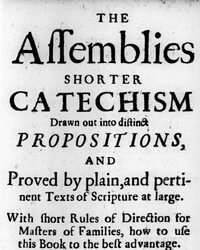
  • Thomas Lye, 1672, The Assemblies Shorter Catechism Drawn out into Distinct Propositions

    What did God at first reveal unto Man, for the Rule of his Obedience? The Rule, which God at first revealed to man, for his obedience, was the Moral Law.

    Thomas Lye’s text
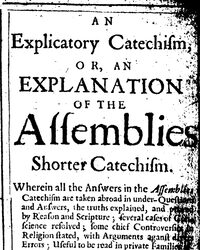
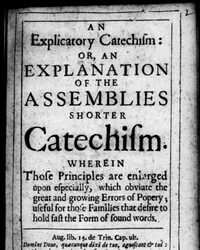
  • Thomas Vincent, 1673, An Explicatory Catechism

    What did God at first reveal unto Man for the rule of his Obedience? The rule which God at first revealed to Man for his Obedience was the Moral Law.

    Thomas Vincent’s text
  • 1675, An Explicatory Catechism

    What did God at first reveal to man for the Rule of his Obedience? The Rule which God at first revealed to man for his obedience, was the Moral Law.

    Its text
  • John Flavel, 1692, An Exposition of the Assembly’s Catechism

    What did God at first reveal to Man for the Rule of his Obedience? The Rule which God at first revealed to Man for his Obedience, was the Moral Law. Where is the Moral Law…

    John Flavel’s text
  • Thomas Watson, 1692, A Body of Practical Divinity (2 parts)

    Deut. 27.9, 10. Take heed and hearken O Israel, This Day thou art become the People of the Lord thy God; thou shalt therefore obey the Voice of the Lord thy God, and do his…

    Thomas Watson’s text
  • Matthew Henry, 1703, A Scripture Catechism

    What did God at First reveal to Man for the Rule of his Obedience? The Rule which God at First revealed to Man for his Obedience, was the Moral Law.

    Matthew Henry’s text
  • Ebenezer Erskine and James Fisher, 1753, The Assembly’s Shorter Catechism Explained, by Way of Question and Answer

    What did God at first reveal to man for the rule of his obedience? The rule which God at first revealed to man for his obedience, was the moral law.

    Ebenezer Erskine and James Fisher’s text
  • Alexander Whyte, 1883, A Commentary on the Shorter Catechism

    the moral law. Mos, a Latin word signifying manners or conduct, hence morals, morality. Philosophers sometimes call the conscience the moral sense, because it concerns itself with…

    Alexander Whyte’s text
  • Francis R. Beattie, 1896, The Presbyterian Standards

    Shorter Catechism, 39–42 and 82, 83; Larger Catechism, 91–98; Confession of Faith, XIX., XX. A great theme, which is viewed in various aspects and treated of in several…

    Francis R. Beattie’s text
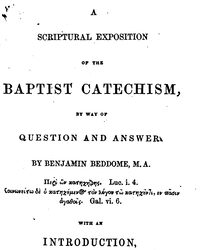
  • Benjamin Beddome, 1752, A Scriptural Exposition of the Baptist Catechism

    On The Baptist Catechism (1695), Question 45, which adapts this question

    Were there positive institutions under the old testament? Yes. There were meats, and drinks, and diverse washings and carnal ordinances, Are there positive institutions under the…

    Benjamin Beddome’s text
  • Francis R. Beattie, 1896, The Presbyterian Standards

    On Westminster Larger Catechism (1647), Question 92, parallel to this question

    Shorter Catechism, 39–42 and 82, 83; Larger Catechism, 91–98; Confession of Faith, XIX., XX. A great theme, which is viewed in various aspects and treated of in several…

    Francis R. Beattie’s text