Did God leave all mankind to perish in the estate of sin and misery?
God having, out of his mere good pleasure, from all eternity, elected some to everlasting lifea did enter into a covenant of grace, to deliver them out of the estate of sin and misery, and to bring them into an estate of salvation by a Redeemer.b
a. Ephesians 1:4
Ephesians 1:4
1:4 According as he hath chosen us in him before the foundation of the world, that we should be holy and without blame before him in love:
1:4 For He chose us in Him before the foundation of the world to be holy and blameless in His presence. In love
King James VersionBerean Standard Bible
b. Romans 3:20–22; Galatians 3:21–22
Romans 3:20–22
3:20 Therefore by the deeds of the law there shall no flesh be justified in his sight: for by the law is the knowledge of sin. 3:21 But now the righteousness of God without the law is manifested, being witnessed by the law and the prophets; 3:22 Even the righteousness of God which is by faith of Jesus Christ unto all and upon all them that believe: for there is no difference:
3:20 Therefore no one will be justified in His sight by works of the law. For the law merely brings awareness of sin. 3:21 But now, apart from the law, the righteousness of God has been revealed, as attested by the Law and the Prophets. 3:22 And this righteousness from God comes through faith in Jesus Christ to all who believe. There is no distinction,
Galatians 3:21–22
3:21 Is the law then against the promises of God? God forbid: for if there had been a law given which could have given life, verily righteousness should have been by the law. 3:22 But the scripture hath concluded all under sin, that the promise by faith of Jesus Christ might be given to them that believe.
3:21 Is the law, then, opposed to the promises of God? Certainly not! For if a law had been given that could impart life, then righteousness would certainly have come from the law. 3:22 But the Scripture pronounces all things confined by sin, so that by faith in Jesus Christ the promise might be given to those who believe.
Did God leave all mankind to perish in the estate of sin and misery?
God having out of his mere good pleasure, from all eternity, elected some to everlasting life, did enter into a covenant of grace, to deliver them out of the estate of sin and misery, and to bring them into an estate of salvation by a Redeemer.
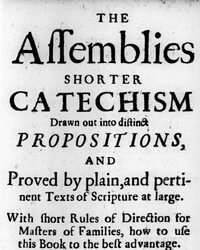
Westminster Shorter Catechism (1647), Question 20
Did God leave all mankind to perish in the estate of sin and misery?
God having, out of his mere good pleasure, from all eternity, elected some to everlasting life did enter into a covenant of grace, to deliver them out of the estate of sin and misery, and to bring them into an estate of salvation by a Redeemer.
Did God leave all mankind to perish in the estate of sin and misery?
God having out of his mere good pleasure, from all eternity, elected some to everlasting life, did enter into a covenant of grace, to deliver them out of the estate of sin and misery, and to bring them into an estate of salvation by a Redeemer.
Did God leave all mankind to perish in the estate of sin and misery?
God having, out of his mere good pleasure, from all eternity, elected some to everlasting life did enter into a covenant of grace, to deliver them out of the estate of sin and misery, and to bring them into an estate of salvation by a Redeemer.
Did God leave all mankind to perish in the estate of sin and misery?
God having out of his mere good pleasure, from all eternity, elected some to everlasting life, did enter into a covenant of grace, to deliver them out of the estate of sin and misery, and to bring them into an estate of salvation by a Redeemer.
Doth God leave all mankind to perish in the estate of sin and misery?
God doth not leave all men to perish in the estate of sin and misery, into which they fell by the breach of the first covenant, commonly called the Covenant of Works; but of his mere love and mercy delivereth his elect out of it, and bringeth them into an estate of salvation by the second covenant, commonly called the Covenant of Grace.
How is the grace of God manifested in the second covenant?
The grace of God is manifested in the second covenant, in that he freely provideth and offereth to sinners a Mediator, and life and salvation by him; and requiring faith as the condition to interest them in him, promiseth and giveth his Holy Spirit to all his elect, to work in them that faith, with all other saving graces; and to enable them unto all holy obedience, as the evidence of the truth of their faith and thankfulness to God, and as the way which he hath appointed them to salvation.
Was the covenant of grace always administered after one and the same manner?
The covenant of grace was not always administered after the same manner, but the administrations of it under the Old Testament were different from those under the New.
How was the covenant of grace administered under the Old Testament?
The covenant of grace was administered under the Old Testament, by promises, prophecies, sacrifices, circumcision, the passover, and other types and ordinances, which did all foresignify Christ then to come, and were for that time sufficient to build up the elect in faith in the promised Messiah, by whom they then had full remission of sin, and eternal salvation.
How is the covenant of grace administered under the New Testament?
Under the New Testament, when Christ the substance was exhibited, the same covenant of grace was and still is to be administered in the preaching of the word, and the administration of the sacraments of Baptism and the Lord’s Supper; in which grace and salvation are held forth in more fulness, evidence, and efficacy, to all nations.
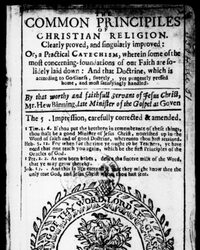
1. Tim. 1. 15. This is a faithful saying, and worthy of all acceptation, that Jesus Christ came in the world to save sinners. Of all Doctrines that ever were published to men,…
Did God leave all Mankind to persih in the state of sin and misery? God having out of his meer good pleasure from all eternity, elected some to everlasting life, did enter into a…
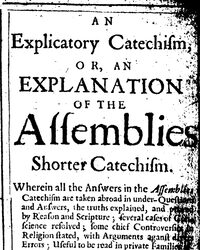
Did God leave all mankind, to perish in the estate of sin, and misery? God having, out of his meer good pleasure, from all eternity, elected some to everlasting life, did enter…
Did God leave all Mankind to perish in the estate of sin and misery? God having out of his meer good pleasure, from all eternity elected some to everlasting life, did enter into a…
Did God leave all mankind to perish in the estate of sin and misery? God having out of his meer good pleasure, from all Eternity elected some to Eternal life, did enter into a…
Did God leave all Mankind to perish in the State of Sin and Misery? God having out of his meer good pleasure from all eternity, elected some to everlasting life, did enter into a…
Quest. XIV. Did God leave Mankind to perish in this state of Sin and Misery? Resp. No; He entred into a Covenant of Grace to deliver the Elect out of that estate, and bring them…
Did God leave all Mankind to perish in the State of Sin and Misery? God having out of his meer good Pleasure, from all Eternity elected some to Everlasting Life, did enter into a…
With this question we enter on the region of Christology, the doctrine of Christ, or Soteriology, the doctrine of salvation, “the Immanuel’s Land of theology.” “We have already…
Shall any of the human race be recovered from the ruins of the fall? Yes. A remnant shall be saved, Are all the saints the objects of God’s eternal choice? Yes. God hath from the…