Westminster Shorter Catechism (1647), Westminster Assembly

Question 78

What is forbidden in the ninth commandment?

The ninth commandment forbiddeth whatsoever is prejudicial to truth, or injurious to our own, or our neighbour’s, good name.a

What is forbidden in the ninth commandment?

The ninth commandment forbids whatsoever is prejudicial to truth, or injurious to our own, or our neighbor’s, good name.a

  1. a. 1 Samuel 17:28; Leviticus 19:16; Psalm 15:3

    1 Samuel 17:28

    17:28 And Eliab his eldest brother heard when he spake unto the men; and Eliab’s anger was kindled against David, and he said, Why camest thou down hither? and with whom hast thou left those few sheep in the wilderness? I know thy pride, and the naughtiness of thine heart; for thou art come down that thou mightest see the battle.

    17:28 Now when David's oldest brother Eliab heard him speaking to the men, his anger burned against David. "Why have you come down here?" he asked. "And with whom did you leave those few sheep in the wilderness? I know your pride and wickedness of heart-you have come down to see the battle!"

    Leviticus 19:16

    19:16 Thou shalt not go up and down as a talebearer among thy people: neither shalt thou stand against the blood of thy neighbour: I am the Lord.

    19:16 You must not go about spreading slander among your people. You must not endanger the life of your neighbor. I am the LORD.

    Psalm 15:3

    15:3 He that backbiteth not with his tongue, nor doeth evil to his neighbour, nor taketh up a reproach against his neighbour.

    15:3 who has no slander on his tongue, who does no harm to his neighbor, who casts no scorn on his friend,

    King James VersionBerean Standard Bible
Diff style

Changes in The Baptist Catechism (1695), Question 83

No change, but in spelling and punctuation.

No change, but in spelling and punctuation.

The Baptist Catechism (1695), Question 83

What is forbidden in the ninth commandment?

The ninth commandment forbiddeth whatsoever is prejudicial to truth, or injurious to our own or our neighbour’s good name.

Westminster Shorter Catechism (1647), Question 78

What is forbidden in the ninth commandment?

The ninth commandment forbiddeth whatsoever is prejudicial to truth, or injurious to our own, or our neighbour’s, good name.

The Baptist Catechism (1695), Question 83

What is forbidden in the ninth commandment?

The ninth commandment forbiddeth whatsoever is prejudicial to truth, or injurious to our own or our neighbour’s good name.

The Baptist Catechism (1695), Question 83

What is forbidden in the ninth commandment?

The ninth commandment forbids whatsoever is prejudicial to truth, or injurious to our own or our neighbor’s good name.

Westminster Shorter Catechism (modernized) (1647), Question 78

What is forbidden in the ninth commandment?

The ninth commandment forbids whatsoever is prejudicial to truth, or injurious to our own, or our neighbor’s, good name.

The Baptist Catechism (1695), Question 83

What is forbidden in the ninth commandment?

The ninth commandment forbids whatsoever is prejudicial to truth, or injurious to our own or our neighbor’s good name.

Related (1)

Westminster Larger Catechism (1647), parallel to this question

Question 145

What are the sins forbidden in the ninth commandment?

The sins forbidden in the ninth commandment are, all prejudicing the truth, and the good name of our neighbors, as well as our own, especially in public judicature; giving false evidence, suborning false witnesses, wittingly appearing and pleading for an evil cause, outfacing and overbearing the truth; passing unjust sentence, calling evil good, and good evil; rewarding the wicked according to the work of the righteous, and the righteous according to the work of the wicked; forgery, concealing the truth, undue silence in a just cause, and holding our peace when iniquity calleth for either a reproof from ourselves, or complaint to others; speaking the truth unseasonably, or maliciously to a wrong end, or perverting it to a wrong meaning, or in doubtful and equivocal expressions, to the prejudice of truth or justice; speaking untruth, lying, slandering, backbiting, detracting, tale bearing, whispering, scoffing, reviling, rash, harsh, and partial censuring; misconstructing intentions, words, and actions; flattering, vainglorious boasting, thinking or speaking too highly or too meanly of ourselves or others; denying the gifts and graces of God; aggravating smaller faults; hiding, excusing, or extenuating of sins, when called to a free confession; unnecessary discovering of infirmities; raising false rumors, receiving and countenancing evil reports, and stopping our ears against just defense; evil suspicion; envying or grieving at the deserved credit of any, endeavoring or desiring to impair it, rejoicing in their disgrace and infamy; scornful contempt, fond admiration; breach of lawful promises; neglecting such things as are of good report, and practicing, or not avoiding ourselves, or not hindering: What we can in others, such things as procure an ill name.

Commentaries (9)

  • Joseph Alleine, 1672, A Most Familiar Explanation of the Assemblies Shorter Catechism

    What is forbidden in the ninth Commandment? The ninth Commandment forbiddeth whatsoever is prejudicial to truth, or injurious to our own, or our neighbours good name.

    Joseph Alleine’s text
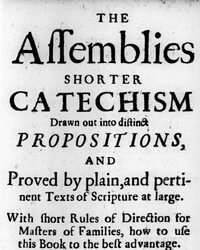
  • Thomas Lye, 1672, The Assemblies Shorter Catechism Drawn out into Distinct Propositions

    What is forbidden in the ninth Commandment? The ninth Commandment forbiddeth whatsoever is prejudicial to truth, or injurious to our own, or our neighbours good name.

    Thomas Lye’s text
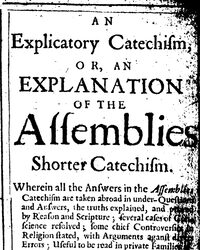
  • Thomas Vincent, 1673, An Explicatory Catechism

    What is forbidden in the ninth Commandment? The ninth Commandment forbiddeth whatsoever is prejudical to truth, or injurious to our own, or Neighbours good name.

    Thomas Vincent’s text
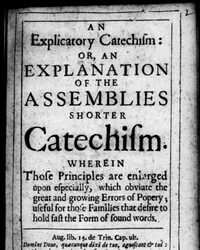
  • 1675, An Explicatory Catechism

    What is forbidden in the ninth Commandment? The ninth Commandment forbiddeth whatsoever is prejudicial to Truth, or injurious to our own or our Neighbours good Name.

    Its text
  • John Flavel, 1692, An Exposition of the Assembly’s Catechism

    Which is the ninth Commandment? The ninth Commandment is, Thou shalt not bear false witness against thy Neighbour. What is required in the ninth Commandment? The ninth Commandment…

    John Flavel’s text
  • Thomas Watson, 1692, A Body of Practical Divinity

    EXOD. XX. 16. Thou shalt not bear False Witness against thy Neighbour. The Tongue, which at first was made to be an Organ of God’s Praise, is now become an Instrument of…

    Thomas Watson’s text
  • Matthew Henry, 1703, A Scripture Catechism

    What is forbidden in the Ninth Commandment? The Ninth Commandment forbiddeth whatsoever is Prejudicial to Truth, or Injurious to our own or our Neighbour’s good Name.

    Matthew Henry’s text
  • Alexander Whyte, 1883, A Commentary on the Shorter Catechism

    The Larger Catechism, in discussing this commandment, calls special attention to unseasonable speech or loquacity, tale-bearing, backbiting, detraction, aggravating small faults,…

    Alexander Whyte’s text
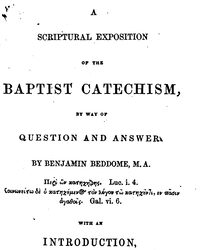
  • Benjamin Beddome, 1752, A Scriptural Exposition of the Baptist Catechism

    On The Baptist Catechism (1695), Question 83, which adapts this question

    Is lying a great sin? Yes. Lying lips are an abomination to the Lord, May we tell lies to make sport? No. They make the king glad with their wickedness, and the princes with their…

    Benjamin Beddome’s text